Filet with Wine Glazed Mushrooms and Apple Pear Slaw
The most notable difference I encounter between America and Russia when I am cooking is the availability of meats. Actually I should say that meat is available no problem, but that there are major differences between American meat and the meat I cook with in Russia. The American public is rapidly becoming aware of the appalling conditions in which meat is raised and slaughtered. I'm not going to go into details about the system, however the result is that we get relatively inexpensive meat, marbleized with fat which produces more flavor.
By contrast, most of the meat available to me in Russia does not have this fat marble and so the meat must be cooked differently. Another big difference that is difficult to get used to is the way meat is cut and portioned. In most traditional markets, they don't have band saws and cutting equipment that is commonplace in American slaughterhouses and butchers. So as I walk the aisles of the marketplace, middle-aged women sling large cleavers with blood splattered across the front of their smock. They chop through a chunk of meat while calling out to me trying to get my attention towards their wares. It always causes a cold shiver to crawl up the back of my neck and I can't help but wonder if they have a hockey mask under the table somewhere. At least I know the meat is fresh.
Since meat is generally hacked up in whichever fashion they choose, premium cuts are often lost, unrecognized, and tossed into the pile for making farsh (ground beef). Occasionally I find steaks that could be called T-bone, but almost never a good filet. The filet is the most luxurious piece of meat on a cow. I remember the first time I cooked a porterhouse steak in Russia for my girlfriend. After taking a bite she couldn't understand the difference; why had I made such a big deal out of finding these 2 steaks? I told her she should now take a bite from the other side of the bone. Watching her eat bite after bite of the filet side, all I heard were unique noises of approval and a simple "wow". There is a difference!
So a good filet is definitely another one of those indulgences I don't pass up when I spend some time in California. Tonight, I made classic filets with a simple twist. Seared filet topped with a white wine, mushroom reduction and topped with some apple pear slaw.
We should prepare the slaw first so when the filets finish cooking we can simply top them and get to eating!

Apple Pear Slaw
1 medium carrot
1 fuji apple
1/2 anjou pear
juice from 1/2 lime.


Place them in a bowl and cover them with the juice of 1/2 lime. The lime juice will keep the slaw from turning brown while we cook the steaks. Toss to coat everything with the lime juice.

You see the two filets here have a beautiful fat marble running through them which is a good sign of flavor. Start off by washing them under running water and drying them completely. Season the filets with salt and pepper on both sides. Preheat the oven to 350F (177C).

Add 2 Tbsp (30 ml) of olive oil to a pan. Don't use a non-stick pan because we actually want the nice brown bits to stick to the pan while we sear the filets for 2 minutes on each side.

After searing the filets on both sides. Place them onto a lightly greased pan (or use aluminum foil) and place them into the preheated oven for 10-12 minutes (depending on the thickness) or until the internal temperature of the meat reaches 135F (57C).

You will notice in this picture, I have stuffed potatoes to go with the filets. The stuffed potato recipe is below.

While the filets are finishing in the oven, return to the pan we seared them in. You will notice lots of tasty little brown bits on the bottom of the pan. This is all great flavor!!

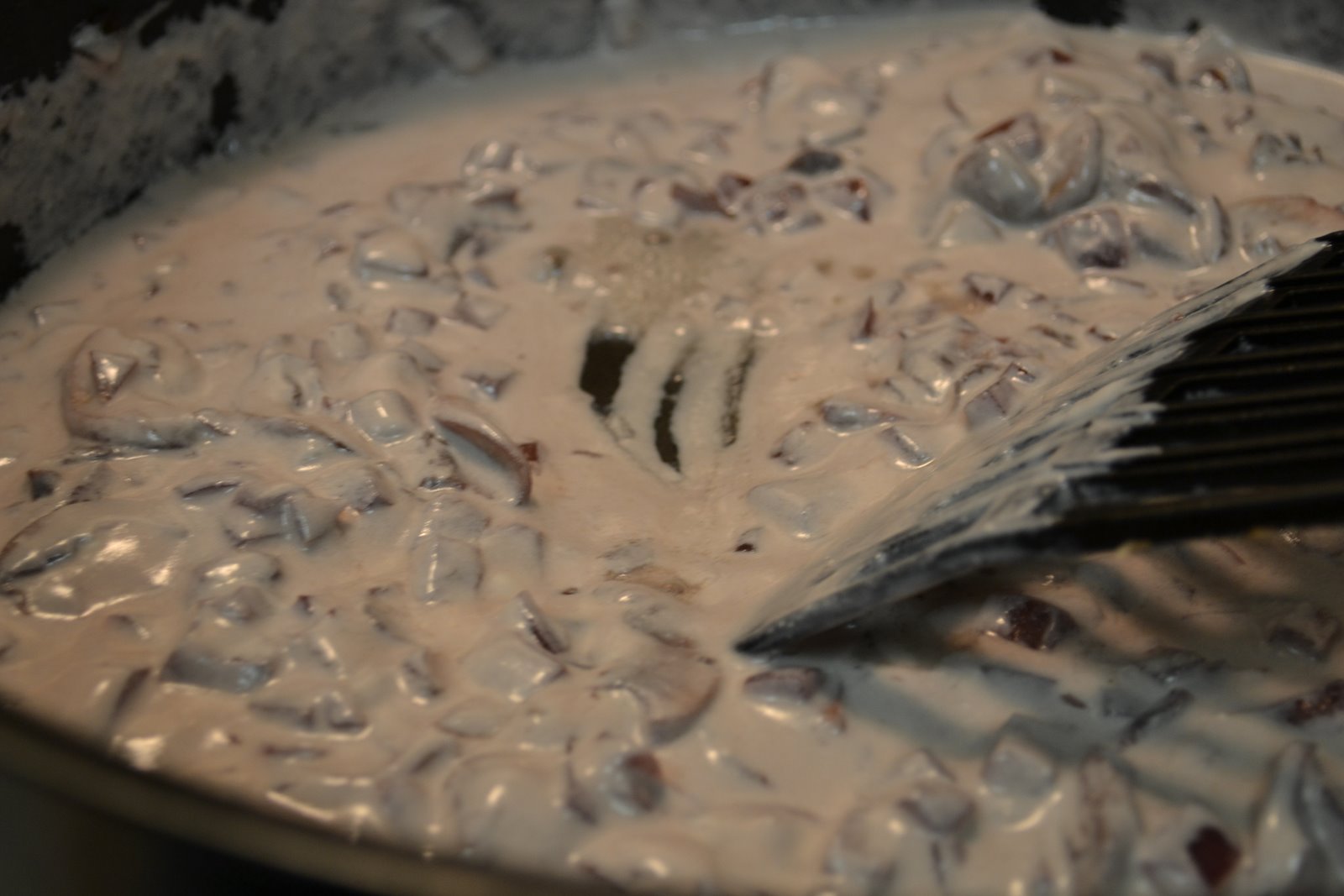
Add 1 cup of dry white wine to the pan and stir over medium heat, scraping all the tasty brown bits off the pan with a wooden spoon. Keep scraping and cooking for 2 minutes, allowing the liquid to reduce and being sure to scrape the pan clean.
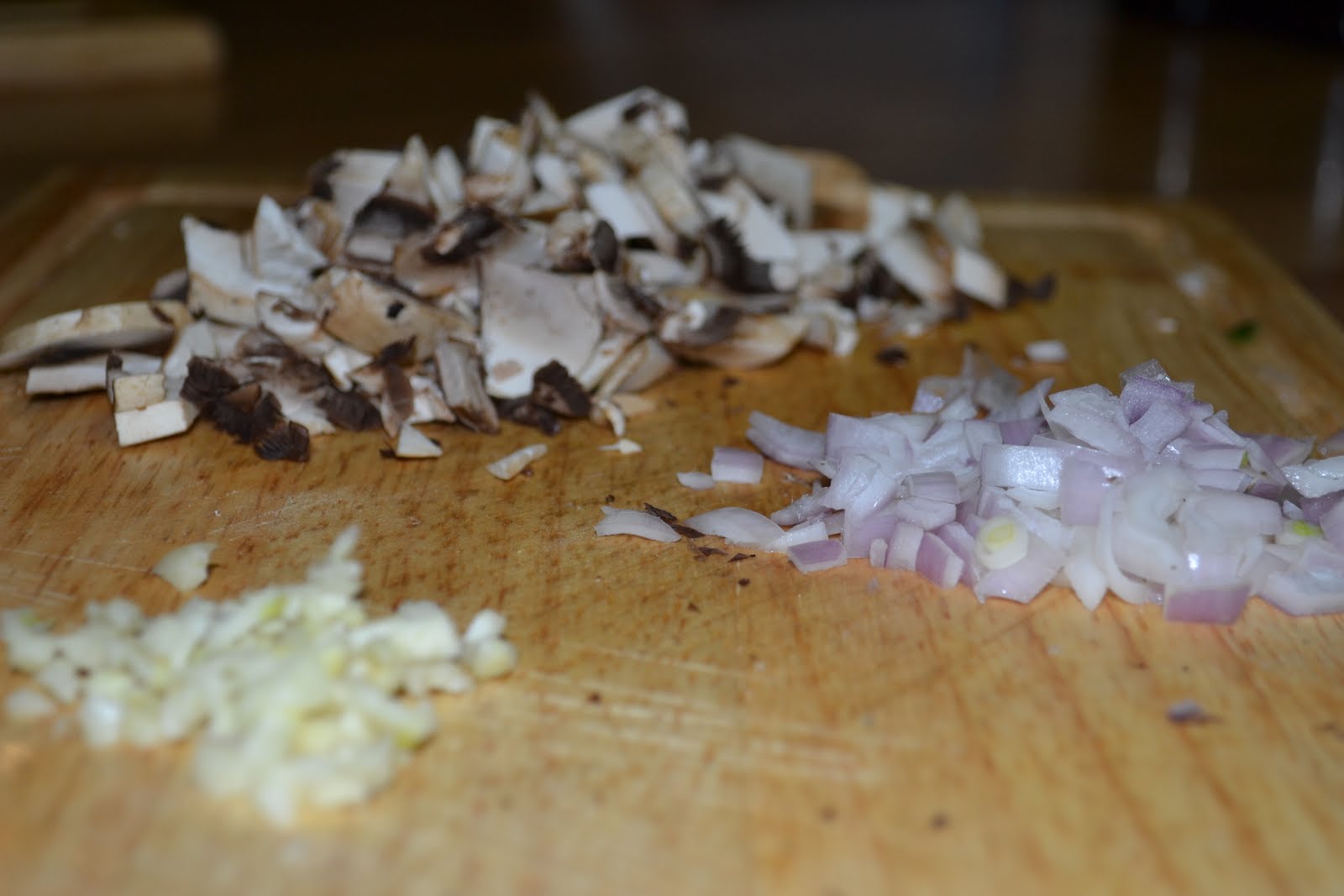
Mince 1 clove of garlic, 1 small shallot (or 1/2 small red onion), and 2 mushrooms.

Add the mushrooms, onion, and garlic to the pan with 1 Tbsp (15 ml) butter. Stir gently until combined. Cook for 5 minutes until the liquid is reduced slightly.

When the filets have reached their perfect internal temperature of 135F (177C), remove them from the oven and place them on a plate. Top the filet with the mushroom mixture.

I have had this debate with my friends in Russia several times. Russians generally (and I hate to generalize) will overcook their meat until it is dry and without any color in the middle. Since there are not many controls for meat quality and preparation, there is a scare of disease. Russians compensate by cooking meats so much that nothing could survive (including the meat). We need to remember that juiciness is determined by temperature. Everybody loves a juicy steak right?
Most bacteria, including salmonella that might be in the meat, die at 140F (60C). By cooking our meat to 135F(57C), the carry-over cooking time will raise the internal temperature to 140C (60C) before it starts to cool again. this will give us dead bacteria (if it was ever there to begin with) and juicy meat!! Sounds like a win-win situation to me. Let the meat rest for 5 minutes before cutting so the juices will settle back into the meat and not just run out when the meat is cut. This rest time also allows the carry-over cooking to do it's job.

Top the steak with the apple slaw and serve.
Stuffed Potatoes

3 medium baking potatoes (russets are perfect)
1 cup (225 ml) cheddar cheese, grated.
2 green onions, chopped
1 Tbsp (15 ml) butter
1/4 cup (59 ml) milk
salt and pepper

Clean the potatoes thoroughly under cold water. Do not peel the potatoes. Poke each potato 3 or 4 times on each side with a fork. This helps the moisture escape while they bake, instead of tearing a hole in the skin to let the moisture out. Bake the potatoes for 50-60 minutes, or until the feel soft when squeezed.

Cut the potatoes in half lengthwise.

Using a clean kitchen towel to protect your hand from the hot potatoes, use a large spoon to hollow out the skin.

Continue to spoon out each potato half and put the scouped potato into a bowl with the grated cheddar cheese. Save the empty skins.

After all the potato halves are hollowed, add 1 Tbsp (15 ml) butter and 1/4 cup (59 ml) milk to the bowl.

Use a potato masher or a fork to mash the potato and cheese mixture with the milk and butter.

Once the potato and cheese is combined, add the chopped green onions and use a spoon to combine. We don't want to add the green onions before this time because the onions would also become mashed while mashing the potatoes.
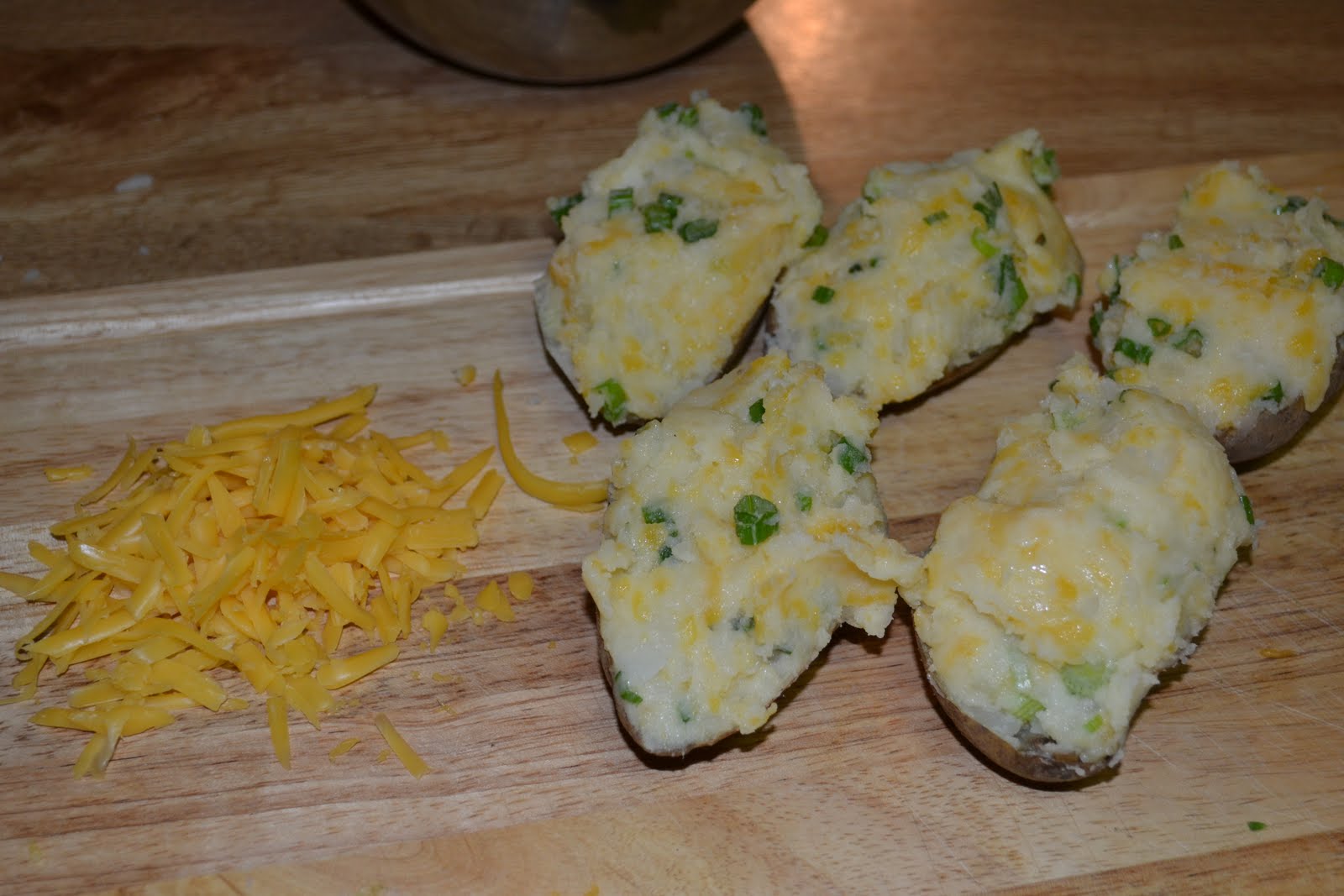
Take each empty skin and use the large spoon to fill them with the mashed potato mixture. I usually overload the skins a little so I will end up with 1 or 2 extra unused skins. This helps in case you accidentally tear a skin too much while refilling them.

After filling the potato skins with the mixture, top them with some of the grated cheddar cheese and place them on a lined pan. Place into the oven on the highest rack and broil for 10 minutes or until the cheese melts and begins to brown.

You can enjoy these stuffed potatoes with many different meals, or even alone by themselves. Top them with bacon, sour cream, or many different condiment ideas you might have. Experiment and see what you like.

There was not much talking while we were eating these filets and stuffed potatoes. It's always a good sign when there's silence, it means people are too busy eating!!

Unfortunately, before you know it, you'll be down to your last bite!! So remember, find a good piece of meat, and we like marbleized fat when looking for a tender piece of meat. Don't overcook the meat!! Cooking meat until there is no color inside means there is also no juiciness and flavor inside, so lets cook it only enough to kill the possible dangerous bacteria, but not so much that we loose our flavors.
The filet is one of my favorite pieces of beef, and when I find it in Russia, it's a big treat. It's usually pretty cheap too because it's sold as just another piece of meat. In any case, finding some great ingredients to go with it, and using just enough heat to get the job done, is one of my favorite American Flavors.